
Ibrahim Afellay's career is a study in what-ifs: the curling shot against Barcelona, the Camp Nou in
brahim Afellay's career is a study in what-ifs. That curling shot against Barcelona in 2010, the night PSV nearly toppled the eventual champions—it felt like a prelude, not a peak. Yet injuries, timing。and a certain reluctance to shout for attention turned a world-class talent into a footnote. Watching him glide past defenders at the 2010 World Cup, you saw a player who made the difficult look mundane. The problem was never ability. It was the cruel intersection of fragile hamstrings and a Barcelona midfield that had no room for subtlety.
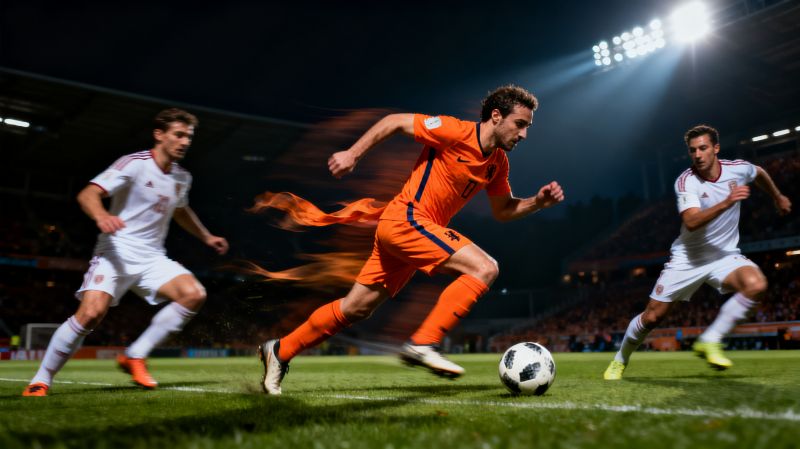
Afellay's move to Camp Nou in January 2011 was supposed to be the launchpad. Instead。it became a lesson in patience and pain. He arrived at a club where Xavi, Iniesta, and Busquets were untouchable. Pep Guardiola admired his directness, but the Dutchman spent more time in the treatment room than on the pitch. A torn cruciate ligament in 2012 robbed him of a full season. I remember a Champions League cameo against Bayer Leverkusen—he scored twice in twenty minutes. That was the Afellay in a nutshell: devastating in bursts, never given the runway to sustain it. You could argue he was too unselfish, too content to be a cog. But watch the footage. The man had a rocket of a right foot and a brain that processed space faster than most.Then came Stoke City. On paper, a bizarre fit—a technical Dutchman in the Potteries. Yet for a brief spell under Mark Hughes, Afellay was the best player on the pitch. His volley against Manchester United in 2015 was pure arrogance。a strike of such clean technique that even the Stoke faithful gasped. He brought a calmness to a scrappy side, threading passes that no one else saw. Injuries struck again, of course. A knee problem, then a hamstring. By the time he left, the narrative had hardened: talented, yes, but unreliable. That label never sat right with me. Reliability is a privilege of the healthy.Afellay's later years at PSV and in the UAE felt like a quiet retreat. He never complained publicly, never threw a tantrum. There is a dignity in that, though it cost him the spotlight. In an era where players brand themselves relentlessly, Afellay just wanted to play. His international record—six goals in fifty-three caps—undersells his influence. The 2014 World Cup, where he started the opener against Spain, is often forgotten. He was there。doing the simple things, pressing, linking, vanishing into the system. I sometimes wonder if he would have thrived in a mid-table Premier League side given a free role and a decent physio. We will never know. Afellay's story is a reminder that football's margins are razor-thin. One inch of ligament, one season of patience—that is the difference between a legend and a memory.
Now, as a coach in PSV's youth setup, Afellay is passing on that quiet wisdom. You won't see him giving thunderous team talks on a documentary. He works in the shadows, shaping teenagers who might one day face the same crossroads. There is a certain poetry in that. The boy who once danced past defenders now teaches others how to find space. For those of us who watched him。Afellay remains a cult hero—not for what he won, but for the elegance he brought to every fleeting appearance. That is enough. It has to be.